Clearing That Accounts for Root Systems
Land Clearing in Johnson City for wooded lots with dense hardwood regrowth and old fence lines
If you walk a wooded lot in the hills around Johnson City or Roan Mountain and count the trees, you will likely underestimate how long it takes to clear it. Dense hardwood regrowth and old fence lines mean stump and root removal takes more time than the tree count suggests, because what is below ground matters as much as what is visible. Swanson's Earth & Stone LLC. does the cutting, grubbing, and stump removal with its own equipment and hauls the debris off site, so you receive one price for the entire clearing job and deal with one crew from start to finish.
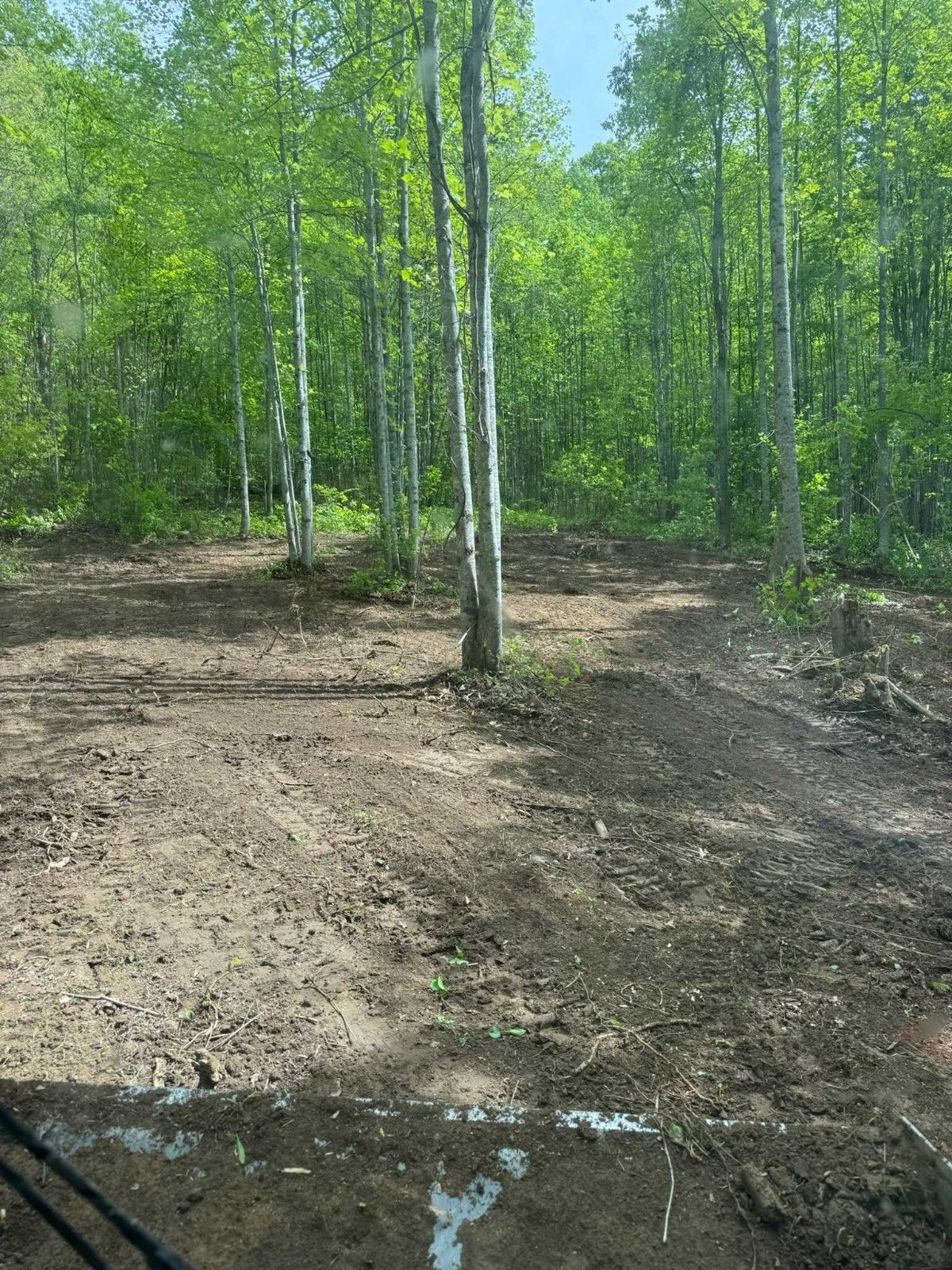
Clearing begins by marking the limits of the work area and identifying any trees to keep, then felling and cutting timber into manageable lengths. Stumps and roots are grubbed out of the building footprint and driveway zone, and the rest are pushed into piles for disposal. The owner decides whether debris is chipped, hauled away, or burned where local regulations permit, and the cleared ground is graded to drain away from where the structure will sit.
Request a site visit to mark clearing limits and review grading requirements before equipment arrives.
How Cleared Ground Becomes Buildable
After the trees, stumps, and root systems are removed, the lot is graded so water moves away from the building footprint and driveway area. What you notice is a clean, level surface ready for foundation work, with no hidden roots that would interfere with excavation or utility trenching later.
Swanson's Earth & Stone LLC. handles both the clearing and the earthwork with the same crew, so the person who removes the stumps is also the person who sets the final grade. That continuity matters on hillside lots in Johnson City and Hampton, where drainage and slope have to be planned before the clearing starts, not adjusted afterward.
Clearing includes removing fence lines, cutting stumps below grade in areas that will be built on, and hauling all debris off site. Grading to final elevation and compaction for driveways or pads is priced separately based on the lot conditions and what the building plans require.
Answers About Clearing Wooded Property
Buyers preparing lots for construction or site development ask about root removal and what happens after the timber comes down.
How are the limits of clearing decided before work starts?
The owner and crew walk the lot together and mark which trees stay, where the building footprint and driveway will sit, and how far clearing needs to extend for drainage and access.
What is the difference between cutting trees and grubbing stumps?
Cutting removes the visible tree, but grubbing pulls the stump and root ball out of the ground so nothing is left to interfere with foundation excavation or utility trenching.
Why does hardwood regrowth take longer to clear than the tree count suggests?
Hardwoods on hillside lots in Johnson City often have extensive root systems that spread laterally, and old fence lines introduce buried metal and posts that have to be removed before grading can begin.
What happens to the debris after clearing?
Depending on your preference and local regulations, debris is either chipped and hauled, loaded whole and hauled to a disposal site, or piled and burned on site where burning is permitted.
How is the cleared ground graded after the trees are gone?
The lot is graded so water drains away from the building footprint, with the slope set to match what the foundation and driveway plans require, and any low spots are filled and compacted.
Swanson's Earth & Stone LLC. also clears land in Johnson City, Hampton, Roan Mountain, and Unicoi. Contact (423) 213-4103 to schedule a site walk and discuss stump removal, debris disposal, and grading once the lot is cleared.